

Inherited, Not Imported: Why Your Grandparents’ Furniture Is The Future
- Gianna

- Mar 16
- 4 min read

Witness the transformation of "brown furniture" from a grimy garage antique into a thriving Gianna D'Art Terrarium Hub. This is the essence of "Inherited, Not Imported"—a sustainable restoration that elevates history for a modern lifestyle.
The Interior Designer’s Role And Responsibility
When evaluating a project, I look beyond aesthetics to ensure ethical consumption. My responsibility is to bridge the gap between historical craftsmanship and contemporary utility. I don't just decorate; I analyse the potential in under-appreciated pieces, evaluating their structural integrity to secure a sustainable future for my clients' spaces.


The Raw And The Refined
A neglected box is not junk; it is a diamond in the rough. Through a strategic aesthetic shift, antique furniture moves from "dated" to "designer." This is more than a fresh coat of paint—it is a reimagining of the piece’s role for the 21st century.
The Raw Beginning: A grime-covered 1930s walnut hutch, abandoned in a workshop, is a raw asset others discard. I see a structurally responsible second act hiding beneath decades of neglect.
Proof of Raw Value: Beneath the dust lies 80lbs of high-grade walnut. This sound asset is ready for re-engineering.
The Restoration Rationale: In design, flat-pack furniture is a depreciating expense. Antique "brown furniture" is a true investment. You aren’t just buying a cabinet; you’re securing high-grade timber that no longer grows at this scale.


The Refined Result: One Silhouette, Infinite Identities
By stripping heavy shellac and integrating LED lighting, a hutch is transformed into a sophisticated display. This refined piece balances the "gravity" of old wood with a contemporary perspective.
Case Study A: The Interior Terrarium: Using reinforced wood shelves as a foundation, the piece becomes a lush, integrated indoor garden with grow lighting.
Case Study B: The Curated Boutique: By removing glass and adding architectural illumination, the antique becomes a hub for premium footwear and designer bags.
Case Study C: The Modern Apothecary: Water-resistant wallpaper and retrofitted shelving add ceremony to wellness rituals and skincare.
Case Study D: The Personal Gallery: The fusion of heritage wood and modern glass creates a professional-grade stage for personal artefacts.
Case Study E: The Private Gallery: A Queen Anne vitrine is reimagined as a glowing sanctuary, proving historical craftsmanship is the ultimate high-luxury anchor for the home.
Securing Design Sovereignty
Integrating these unique elements is the only way to escape the "Clone Home" popularised by social media algorithms. Introducing a repurposed piece creates a statistical anomaly in a space, anchoring a home with a story that belongs exclusively to the owner.





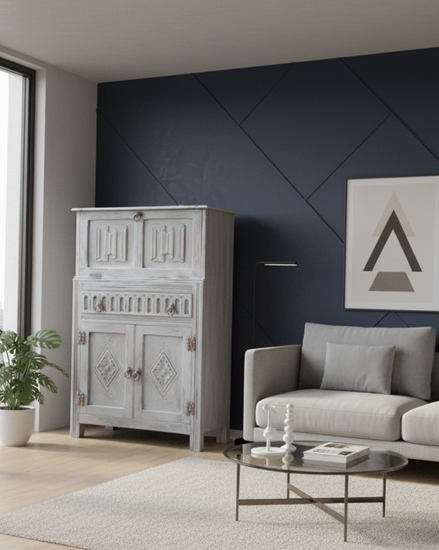
The "Bare Wood" Revolution
By utilising a specialised "Bare Wood" finish or lime-wash, the heavy presence of original oak is replaced with a soft, ethereal glow. This allows intricate hand-carved details to catch the light, grounding a minimalist space with warmth and tactile history.
The Modern Dual-Function Work-And-Wine Hub
Antique cabinets were rarely just "furniture." Through engineering analysis, we can identify a new strategic purpose. This hutch can function as both a sophisticated Cocktail Station and a discreet Home Office, proving that old artistry is never obsolete—it is simply awaiting its second act.
Proof Of Quality: Antiques Vs. Flat-Pack
While flat-pack furniture offers immediate convenience, it fails to provide long-term value. The difference is in the details:
Flat-Pack: Relies on cam locks and dowels that weaken over time.
Antique: Features hand-cut dovetail joints—the hallmark of a high-end timber investment.
"Old" does not mean "obsolete"—it means "proven." By choosing to reimagine history, we refuse to discard artistry, creating functional art pieces built to last a lifetime.
The Hallmark Of Quality

A Legacy Reclaimed
The fundamental difference between a modern purchase and a restored antique lies in the soul of the material. While flat-pack furniture relies on cam locks and dowels that inevitably weaken, the hand-cut dovetail joints of a 1930s hutch represent a mechanical bond built to endure generations. These pieces were engineered for a time when "investment" meant a lifetime, not a season.
Choosing to restore is a radical refusal to participate in a "throwaway" culture. It is a commitment to Design Sovereignty—choosing a home that tells a personal narrative rather than reflecting a fleeting digital trend. "Old" does not mean "obsolete"—it means "proven." By reclaiming these high-grade timber assets, we aren't just saving furniture; we are securing a high-luxury, sustainable anchor for the modern home. In this transformation, we choose to reimagine history, creating functional art pieces that were truly built to last a lifetime.
Secure Your Own Piece Of History
The journey from a "grimy find" to a "gallery centrepiece" is a testament to the power of intentional design. Are you ready to stop buying disposable trends and start investing in legacy?
Explore the Collection: Visit our Salvage Hub to see our latest vetted finds awaiting their second act
Commission Your Story: Have a heritage piece that needs a strategic reimagining?
[Book a Design Consultation] with Gianna D’Art Studio today.
Stay Inspired: Follow our restoration journeys in real-time on [Pinterest & X)


Comments